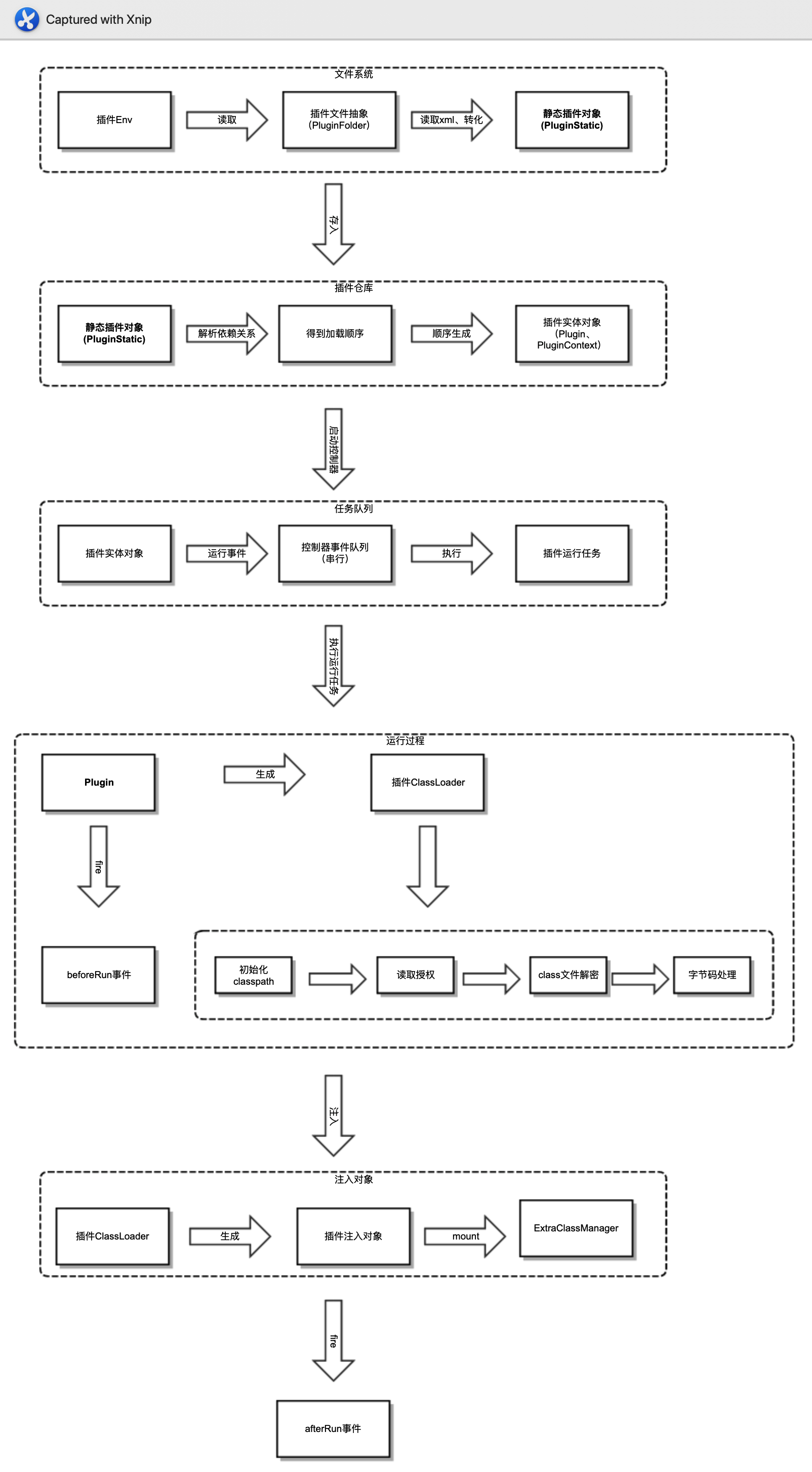
Plugin Architecture
Key Characteristics
- Hot deployment — introduces challenges around object cleanup, resource release, and cache invalidation.
- Obfuscation and encryption — the engine internals cannot be accessed directly; all access must go through a bridge.
- Bytecode-level processing — dynamic proxy equivalents are achieved via bytecode manipulation before runtime.
Key Points
- The plugin engine only monitors environment enter/exit events: it starts when the environment is entered and stops when it exits.
- All objects described in
plugin.xmlare instantiated immediately at startup, without waiting for servlet events. - The plugin engine abandons dynamic proxies in favor of pre-runtime bytecode manipulation, which allows
instanceofand similar operations to be used on plugin objects. - Each plugin has its own ClassLoader
- When loading resources inside a plugin, do not use the system ClassLoader.
- In FineReport,
IOUtilsreads resources andGeneralUtils.classForName()deserializes objects — both utility methods iterate over all plugins. - A new ClassLoader is created on each run, ensuring plugins that perform operations during class initialization work correctly with hot deployment.
Overall Structure
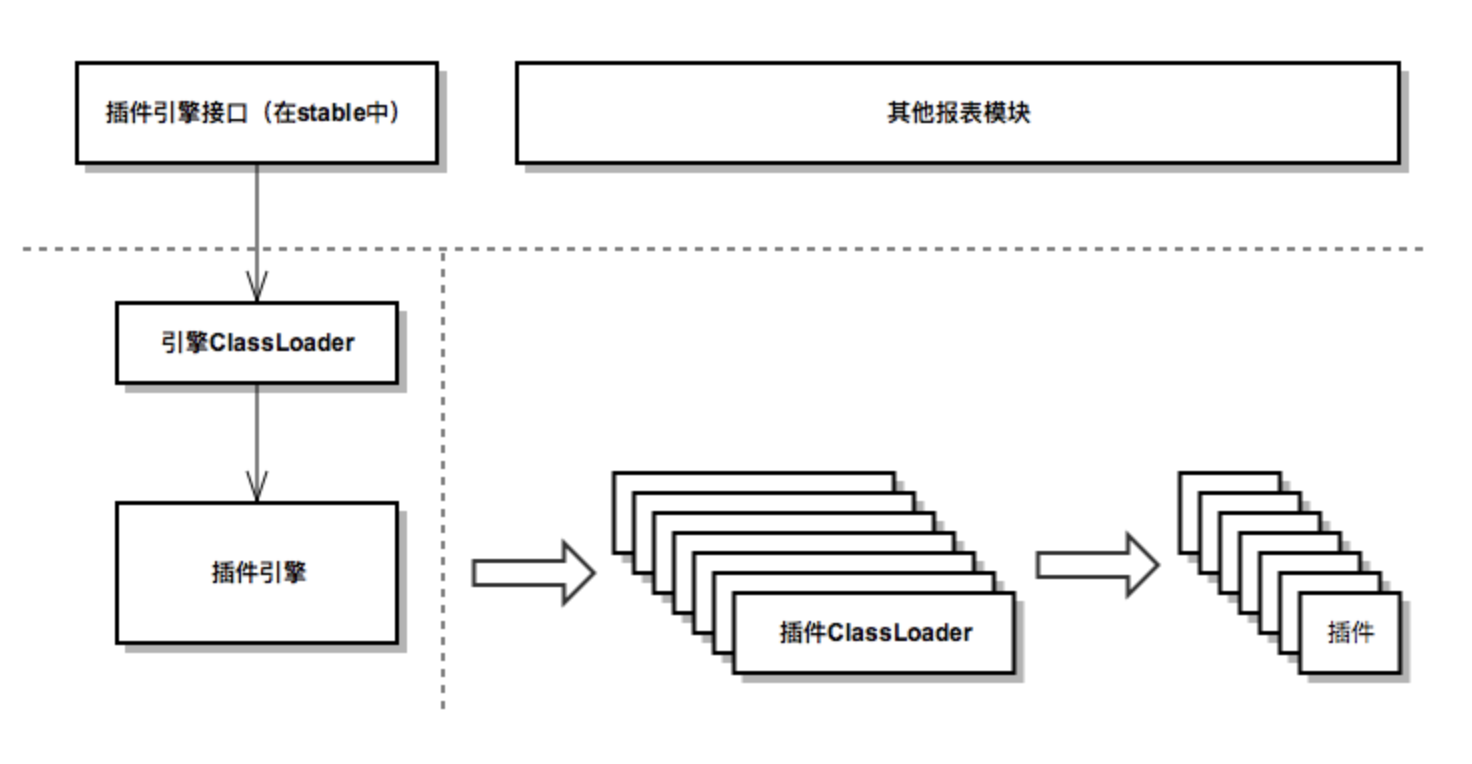
The plugin framework is divided into two main parts:
| Part | Location | Description |
|---|---|---|
| Interface definition layer | stable module |
All interface definitions and base implementations; accessible from outside |
| Engine implementation layer | Inside the plugin engine | Loaded via a custom ClassLoader; accessed through PluginManager |
Interface Layer (stable module)
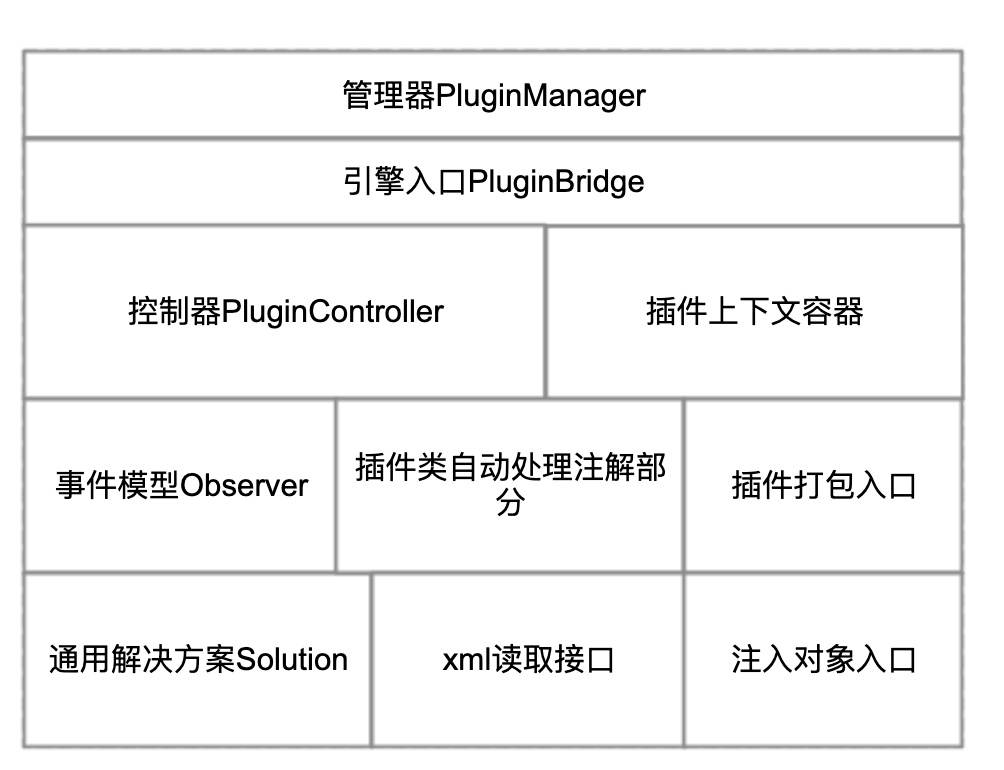
- Plugin context interface: defines the functionality and access patterns of the plugin context object.
- Manager: connects the interface layer to the engine implementation.
- Controller: defines the control interface for the plugin lifecycle (run, disable, update, delete, etc.)
- Plugin resource pool
- Plugin context object
- observer: the plugin listener model for reacting to plugin events; solves hot-deployment problems such as object cleanup, resource release, and cache invalidation.
- solution: a common solutions module that provides convenient tools for handling hot-deployment issues.
- pack / transformer: define the interface for custom tasks during plugin packaging and the interface for processing plugin class files, respectively.
- Other: plugin object injection,
ExtraClassManagerdefinition,plugin.xmlreading interface, licensing, and error codes.
Engine Layer
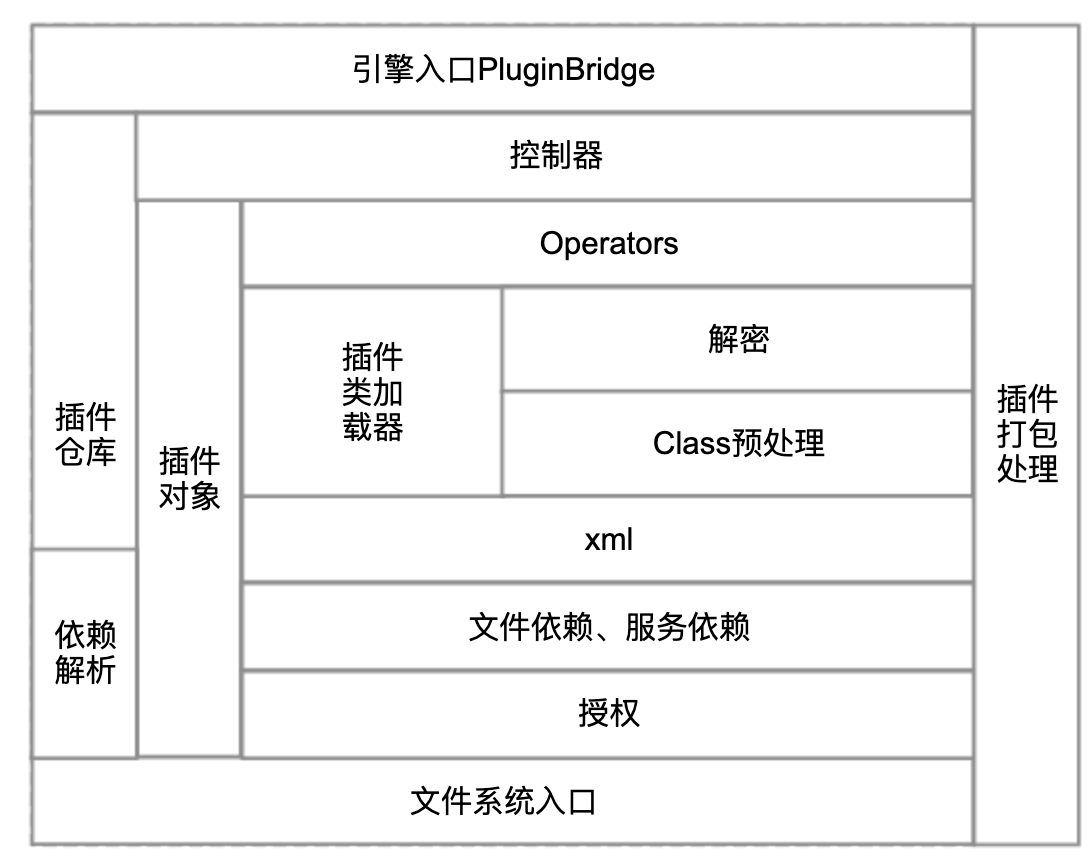
| Module | Description |
|---|---|
bridge |
Connected to PluginManager; the entry point to the entire plugin engine |
control |
Controller; works with Plugin objects to implement run, disable, update/delete, and hot deployment |
core |
Plugin and PluginContext implementation; custom PluginClassLoader |
env |
Plugin filesystem abstraction; handles differences across deployment environments |
pretreatment |
Pre-packaging processing; integrates javassist to automatically process class files at packaging time |
transformer |
Runtime processing; integrates javassist to perform bytecode manipulation before class files are loaded |
encryption |
Plugin encryption and decryption module |
dependence / embfile |
Handles the corresponding tags in plugin.xml |
| Other | License, error handling, XML parsing |
Plugin Load and Run Flow